Naksan Park is one of the best places in Seoul to show visitors the whole city at a glance, while also telling the story of old Hanyang and the royal capital.
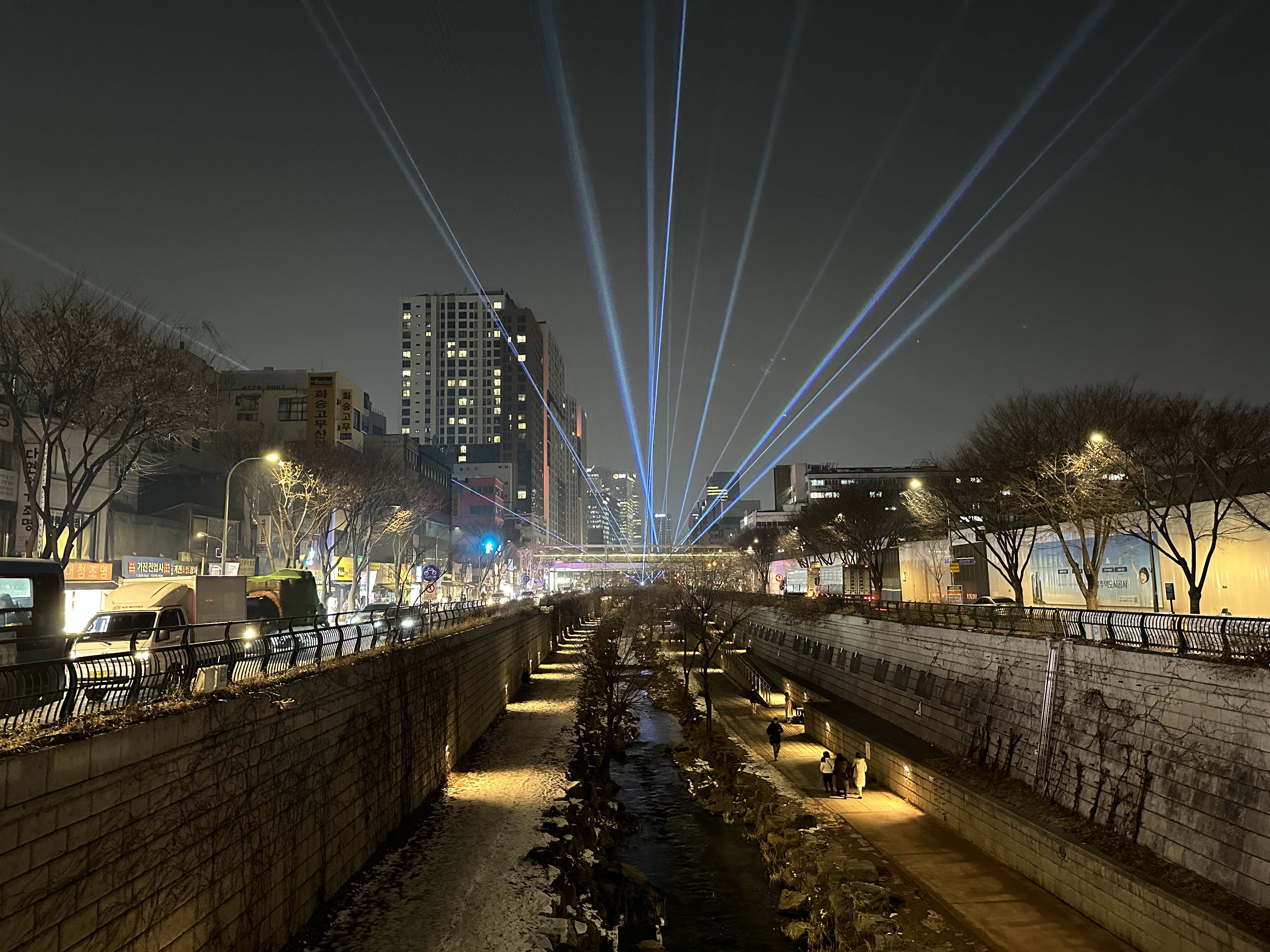
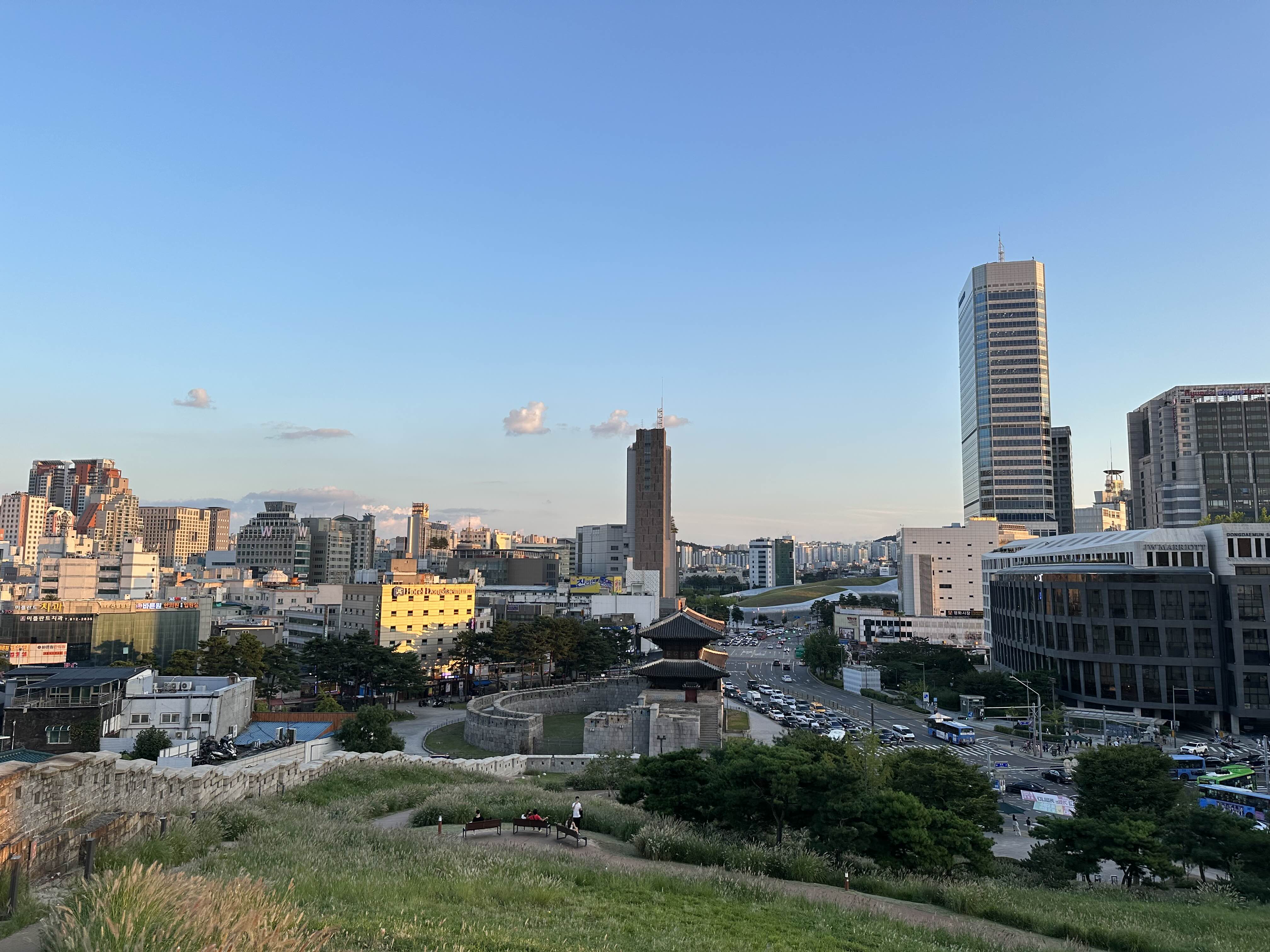
Below is a ready‑to-use English guide script you can adapt while standing at the main viewpoint along the fortress wall.
⸻
1. Short opening (when your group arrives)
“Welcome to Naksan Park, here in Jongno-gu.
We’re standing on Mount Naksan, a low mountain about 125 meters high on the eastern side of central Seoul. It’s one of the four inner guardian mountains that once protected the old capital, along with Bugaksan in the north, Inwangsan in the west, and Namsan in the south. The Seoul City Wall follows the ridgeline of these mountains, and that’s the historic wall you can see right beside us.” 
⸻
2. Explaining the name and origins
“The name Naksan is written with Chinese characters meaning ‘Camel Mountain’. If you look at the long back of the ridge, it’s said to resemble the hump of a camel.
In the Joseon Dynasty this area had another name, Taraksan. Tarak means fermented milk. There used to be a royal ranch here that supplied milk to the palace, and court chefs used that milk to make a special royal milk porridge called tarak-juk. So this small hill once helped feed the king.” 
⸻
3. Brief history of the mountain and the park
“For centuries, Naksan was loved for its rocks and views. But in the 20th century, especially during the Japanese colonial period and the rapid development of the 1960s, a lot of the mountain was cut away. Apartment blocks and dense housing climbed up the slopes, and the original landscape almost disappeared.
To restore some green space and protect this historic site, the Seoul Metropolitan Government created a large restoration plan. As part of that plan, Naksan Park opened in 2002. Since then it has become a popular neighborhood park where locals and visitors can walk along the Seoul City Wall, enjoy trees and sculptures, and of course—admire this view.” 
⸻
4. Viewpoint commentary – “What you’re looking at now”
Use this part while pointing in different directions.
“From here you get a 360‑degree panorama of Seoul. Even though Naksan is not very high, the city spreads out below us like a map.
If you look straight ahead and slightly to the left, you can see the cluster of high‑rise buildings in central Seoul. On a clear day, the dark shape of Bukhansan mountain range appears behind them like a wall of blue‑grey rock.
Turning a bit to the right, you can spot Namsan with the N Seoul Tower on top. That tower is one of the easiest landmarks to recognize from Naksan Park, especially at night when it’s lit in different colors.
Directly below us is the Daehangno area, the university and theatre district. Further down and to the right is the Dongdaemun area, famous for late‑night shopping; from some points along the wall you can even see the futuristic curves of Dongdaemun Design Plaza (DDP).
Behind us, if you walk a little further along the trail, you’ll see more of the northern mountains around Seoul. So from this one small hill, you can read the whole geography of the city—from the old fortress wall at your feet to the skyscrapers and distant peaks on the horizon.” 
⸻
5. The Seoul City Wall section
“The stone wall running beside us is part of Hanyangdoseong, the Seoul City Wall, first built at the end of the 14th century when Seoul—then called Hanyang—became the capital. The full wall was about 18 kilometers long and followed the ridges of the four guardian mountains to protect the city.
The section here on Naksan stretches between Hyehwamun Gate in the north and Heunginjimun Gate, better known as Dongdaemun, in the south. Today, an easy walking path follows the wall, with wooden decks, lighting, and small plazas where you can stop for photos or just enjoy the breeze.” 
You can add a night‑view comment:
“At night this wall is beautifully lit, and the city below becomes a sea of lights. That’s why Naksan Park is known as one of Seoul’s most romantic night‑view spots, especially for couples.” 
⸻
6. Main attractions in and around Naksan Park
You can introduce these as you walk, or summarize them at the viewpoint.
1) Naksan Fortress Wall Trail & Observation Decks
“The Naksan Mountain Trail is part of the official Seoul City Wall hiking course. It’s considered the easiest of the four mountain sections because the slope is gentle and the height is only about 125 meters. Wooden decks and paved paths make it comfortable even for casual walkers. Along the way, there are several observatory platforms and small pavilions where you can rest and take photos of the skyline.” 
2) Naksanjeong Pavilion & small historical spots
“Inside the park you’ll find Naksanjeong Pavilion, a traditional Korean pavilion built as a viewpoint over the city. It’s a quiet place to sit and imagine how the scenery looked to scholars and officials in the past. Nearby, the park also preserves several historic places, such as Biudang, the humble house of an honest prime minister, and Jajudong Spring, linked to the tragic story of King Danjong and his queen. These small sites connect the scenery around us with very personal stories from the Joseon court.” 
3) Naksan Exhibition Hall
“Near one of the park entrances there is a small Naksan Exhibition Hall. It’s free to enter and shows the history of the mountain, the story of the royal dairy ranch, and the construction of the Seoul City Wall. If you have time, it’s a good place to understand what you are seeing outside.” 
4) Ihwa Mural Village (Ihwa-dong Mural Village)
“Just below the park is Ihwa Mural Village. This hillside neighborhood was once a poor ‘moon village’ where working‑class families lived on the steep slopes. In 2006, the government launched the Naksan Project, inviting around 70 artists to paint murals and create installations on the walls, steps, and roofs of the village. Since then, colorful paintings, sculptures and small cafés have turned it into a famous photo spot.
When you guide people there, it’s important to remind them that it’s still a residential area. We should keep our voices low, avoid blocking doorways, and respect the privacy of the locals.” 
5) Myogaksa Temple
“On the eastern side of Naksan is Myogaksa Temple, founded in 1942. It’s the headquarters of the Gwaneum Order of Korean Buddhism. Built according to traditional geomancy, the temple is said to stand where the ‘blue dragon’ energy protects the city. Visitors can join templestay programs, listen to the evening bell, or simply enjoy the quiet courtyard with views back toward downtown Seoul.” 
6) Sculptures and photo zones
“Around the lower parts of Naksan Park and at the entrance to Ihwa Mural Village you’ll notice several steel sculptures—for example, a couple holding hands and a man walking a dog toward the sky. These artworks act as a ‘gateway’ between the modern city, the mural village, and the historic park above.” 
⸻
7. Modern culture & K‑drama connection
“Because of its dramatic views and atmospheric wall, Naksan Park is also a popular filming location. Several Korean dramas, including The Heirs (The Inheritors) and My Lovely Girl, used the park and the wall trail as romantic backdrops. For K‑drama fans, walking here feels like stepping into a scene from the screen.” 
⸻
8. Nice closing line for your tour
“So Naksan Park may look like a simple neighborhood hill, but it combines everything that makes Seoul special:
ancient city walls, royal history, everyday neighborhoods, street art, and one of the most beautiful night views in the city.
When you stand here, you’re not only looking at today’s Seoul—you’re standing on the camel’s back that has quietly watched this city change for more than 600 years.”
'여행' 카테고리의 다른 글
| 카와토모 총본점(川とも 総本店) 후기장어 (0) | 2025.12.03 |
|---|---|
| 川とも 総本店 (0) | 2025.12.03 |
| Exploring Cheonggyecheon Stream to Dongdaemun at Night in Seoul (0) | 2025.11.13 |
| The Grand Egyptian Museum (GEM): A Comprehensive Overview (0) | 2025.11.05 |
| 이집트 대박물관 개관 종합 정보 (0) | 2025.11.05 |


