(Comprehensive English guide based on official Cultural Heritage Administration records and verified historical sources, updated for March 2026)
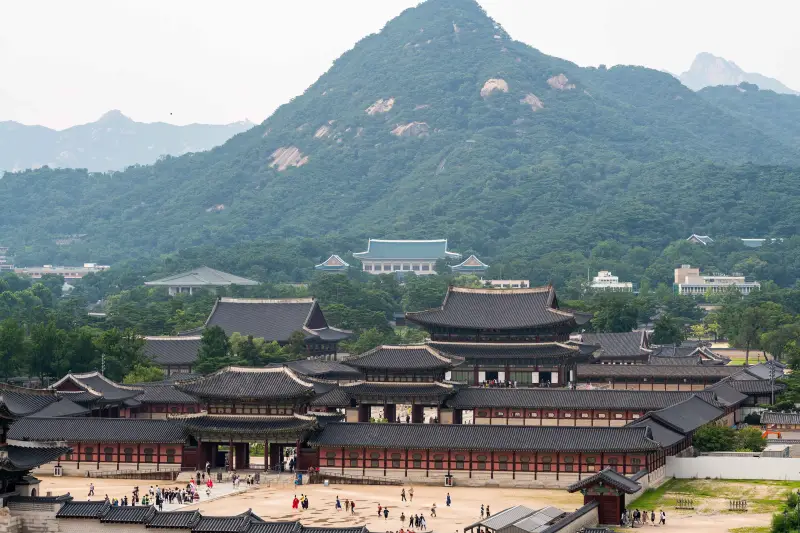
Gyeongbokgung (경복궁, 景福宮) is the largest and most important of Seoul’s Five Grand Palaces. Its name literally means “Palace Greatly Blessed by Heaven” (or “Palace of Great Blessings and Fortune”), chosen by scholar Jeong Do-jeon from a verse in the ancient Classic of Poetry. It symbolizes the hope that the newly founded Joseon Dynasty would enjoy heavenly prosperity.
Built as the principal royal residence and seat of government, the palace has witnessed over 600 years of Korean history — from the dynasty’s golden age to foreign invasions, colonial destruction, and modern rebirth. Today, after decades of painstaking restoration, it stands as a powerful symbol of Korean resilience and cultural pride.n6biC“LARGE”
Official Timeline of Key Events
(From Cultural Heritage Administration of Korea)
Year
Event
1395 (King Taejo, Year 4)
Palace established after Joseon founding in 1392. Construction completed; King Taejo moves in.
1426–1446 (King Sejong)
Major expansions; Hunminjeongeum (Hangul alphabet) created and distributed here.
1592 (King Seonjo, Year 25)
Completely burned during the Imjin War (Japanese invasion).
1865–1867 (King Gojong)
Massive reconstruction begins under Regent Heungseon Daewongun. Main buildings completed; Gojong moves in.
1873
Geoncheonggung (private royal quarters) added.
1895
Empress Myeongseong (Queen Min) assassinated by Japanese agents at Okhoru Pavilion in Geoncheonggung.
1915–1926
Most buildings demolished for Japanese exhibitions; Japanese Government-General Building constructed (overshadowing the throne hall).
1990–2010
First Restoration Plan: Japanese building demolished (1995–1996); ~89 buildings restored (reaches ~25% of original scale).
2008–2045 (ongoing)
Second Restoration Plan: Additional buildings being rebuilt to approximate the 1888 Gojong-era appearance.
2023
Gyejodang Hall (East Palace) restored and opened.
2026–2027
Founding & Golden Age of Early Joseon (1395–1592)
After overthrowing the Goryeo Dynasty in 1392, King Taejo chose Hanyang (modern Seoul) as the new capital for its perfect geomantic location — backed by Bugaksan Mountain to the north and facing south toward the Han River. Construction of Gyeongbokgung began in late 1394 and the first phase finished in September 1395.
The palace followed strict Confucian principles: three courtyards (outer government area, middle political area, inner royal family area), symmetrical layout, and harmony with nature. Under King Sejong the Great (r. 1418–1450), it became the true heart of the kingdom. Scientific inventions (water clock, astronomical observatory, movable-type printing) and the creation of Hangul (the Korean alphabet) happened here in 1443–1446 at the Hall of Worthies (Jiphyeonjeon).
For nearly 200 years the palace flourished as the official royal residence, though kings often stayed at secondary palaces like Changdeokgung.
Destruction in the Imjin War & 273 Years of Ruins (1592–1865)
In 1592, during the Imjin War, Japanese invaders burned the entire palace to the ground (along with most of Seoul). Some Korean records suggest local commoners may have set fires to destroy tax and government records rather than let them fall to the enemy.
Reconstruction plans were repeatedly postponed due to the war’s devastation and economic recovery. For over 270 years the palace lay in ruins while kings lived elsewhere. Occasional minor repairs and rituals took place, but Gyeongbokgung remained largely abandoned — a haunting reminder of national trauma.
Grand Reconstruction under King Gojong (1865–1888)
In 1865, Queen Sinjeong (regent for young King Gojong) ordered full-scale rebuilding under the direction of Heungseon Daewongun (Gojong’s father and a powerful regent). This was one of the largest construction projects in Korean history:
• Over 600,000 workers participated.
• Thousands of homes were demolished for materials.
• Main work finished by 1867–1868 (Gojong moved in); full completion after fires and repairs by 1888.
At its peak, the palace had over 500 buildings and ~7,700 rooms — the largest royal complex in Seoul. New sections included Geoncheonggung (private quarters where the tragic assassination of Empress Myeongseong occurred in 1895). The first electric lights in Korea were installed here in 1887.
Japanese Colonial Period & Systematic Destruction (1910–1945)
After Japan annexed Korea in 1910, Gyeongbokgung became a deliberate target. Japan viewed the palace as a symbol of Korean sovereignty and set out to erase it:
• Most wooden buildings were sold, dismantled, or burned (only ~40 remained by 1945).
• 1915 Joseon Industrial Exhibition: Dozens of halls demolished.
• 1916–1926: Massive Japanese Government-General Building (a Western-style colonial headquarters) built directly in front of Geunjeongjeon Hall — literally overshadowing the Korean throne.
The palace was turned into a public park and exhibition ground. This period represents one of the darkest chapters in its history.OQ545“LARGE”
Post-Liberation Recovery & Modern Restoration (1945–Present)
After Korea’s liberation in 1945, the Japanese building briefly served as the U.S. military headquarters and then South Korea’s Central Government Building. It survived the Korean War but fell into disrepair.
Serious restoration began in the 1980s–1990s:
• 1995–1996: Japanese Government-General Building finally demolished — a huge national moment of reclamation.
• First Restoration Plan (1990–2010): 89 buildings restored.
• Second Restoration Plan (2008–2045, ongoing): Aims to recreate ~90 more structures to match the late 19th-century layout while preserving archaeological evidence. Recent highlights include full restoration of Gwanghwamun Gate, Chwihyanggyo Bridge, and Gyejodang Hall (2023).
2026 Update: The National Folk Museum building inside the palace grounds is in the final planning stage for demolition (part of Stage 1–2 of the current plan). This will open space for restoring original Joseon structures. The museum collections will eventually move to Sejong City.
Key Buildings & Their Stories You Can See Today
• Geunjeongjeon Hall (Throne Hall) — Rebuilt 1867; site of coronations and state affairs (National Treasure).
• Gyeonghoeru Pavilion — Floating on a lotus pond; used for royal banquets (rebuilt 1867, National Treasure).HZuhh“LARGE”
• Geoncheonggung & Okhoru — Site of the 1895 assassination (private royal area).
• Hyangwonjeong Pavilion — Peaceful rear garden (1873).
• Gwanghwamun Gate — Main entrance, fully restored 2010.
Visiting Tip for History Lovers
Join the free English guided tours (11:00 AM, 1:30 PM, 3:30 PM) — guides explain these layers of history on-site. Wear hanbok for free entry and imagine walking the same paths as King Sejong or Gojong. The Changing of the Royal Guard ceremony (10:00 AM & 2:00 PM) recreates Joseon-era rituals.
Gyeongbokgung is not just beautiful architecture — it is living Korean history. From heavenly blessings in 1395 to colonial shadows in the 1920s and proud restoration in the 21st century, every stone tells the story of a nation’s endurance.
Sources: Official records from the Cultural Heritage Administration of Korea (royal.cha.go.kr & english.cha.go.kr), verified historical annals, and the Second Restoration Plan documents (as of 2026).
'여행' 카테고리의 다른 글
| BTS Comeback Concert at Gwanghwamun Square – Full 2026 Guide (0) | 2026.03.10 |
|---|---|
| Hanbok Rental Guide Near Gyeongbokgung Palace (Updated March 2026) (0) | 2026.03.10 |
| Comprehensive Tourist Guide to Seoul’s Gwanghwamun, Gyeongbokgung (0) | 2026.03.10 |
| Exploring the 2026 Michelin Guide Seoul: Bib Gourmand Winners (0) | 2026.03.05 |
| 首尔核心一日游:东大门 ➔ 清溪川 ➔ 明洞 超详细本地人导游指南 (0) | 2026.03.05 |


