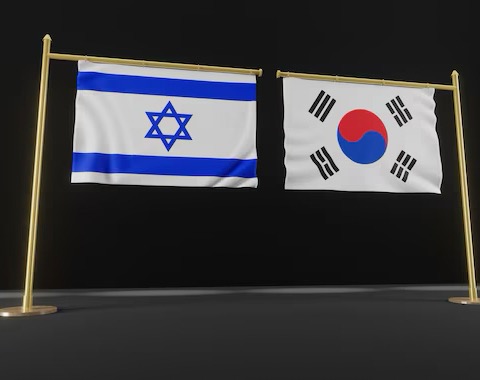
National power is measured by a combination of hard power (economy, military scale, geography, demographics) and soft power (innovation, diplomacy, cultural influence, human capital). South Korea (Republic of Korea) and Israel are both remarkable “middle powers” — resource-limited yet highly advanced nations that have leveraged technology, alliances with the United States, and intense national focus to achieve global impact far beyond their size.
However, when examined through the latest 2026 data, South Korea demonstrates decisive superiority across most core dimensions of national power due to its vastly greater scale, economic output, military manpower, industrial dominance, and broader global projection. Israel possesses notable qualitative strengths (e.g., per-capita metrics and specialized tech agility), but these are outweighed by South Korea’s overwhelming quantitative and structural advantages that translate into greater resilience, sustainability, and overall influence in a multipolar world.10
1. Geography and Demographics: South Korea’s Massive Scale Advantage
• Population: South Korea ≈ 51.75 million (2026 est.); Israel ≈ 9.99 million. South Korea has a 5.2× population advantage, delivering a far deeper pool for military reserves, workforce, and consumer markets.30
• Land Area: South Korea ≈ 97,230 km² vs. Israel ≈ 21,640 km². South Korea’s larger territory supports diversified industrial bases and logistical depth.
• Strategic Context: Both face existential threats (North Korea for SK; Iran-backed proxies for Israel), but South Korea’s location in dynamic Northeast Asia provides access to massive regional markets (China, Japan, ASEAN) while its U.S. alliance offers robust extended deterrence. Israel’s compact geography enables rapid internal mobilization but limits strategic depth and exposes it to multi-front hybrid warfare.
• Nuances and Implications: South Korea’s larger, educated population drives sustained economic momentum despite low fertility challenges. Israel’s younger demographic yields high growth rates, but South Korea’s absolute manpower edge is decisive in prolonged conflicts or industrial scaling. Edge case: In a major regional crisis, South Korea can mobilize millions more reservists and sustain longer attrition wars without external dependency.
South Korea’s demographic scale alone positions it as a far more formidable actor in global power projection.
2. Economy: South Korea’s Overwhelming Size and Industrial Dominance
• Nominal GDP (2026 projections): South Korea ≈ $1.94–2.1 trillion (12th globally); Israel ≈ $610–730 billion (≈29th). South Korea’s economy is roughly 3× larger in absolute terms, giving it unmatched financial leverage, supply-chain control, and crisis resilience.614
• Growth and Structure: South Korea leads in high-value manufacturing — semiconductors (world’s top producer, critical for AI/global tech), shipbuilding (high-tech vessels), automobiles (Hyundai/Kia global giants), and batteries/EVs. These sectors generate massive trade surpluses and strategic chokepoint influence. Israel’s “Startup Nation” model excels in niche high-tech (cyber, biotech), but lacks South Korea’s scale in foundational industries.
• Fiscal and Trade Power: South Korea maintains stronger trade balances and lower relative public debt. Its 2022 FTA with Israel has boosted bilateral ties, yet South Korea’s global export reach (to Europe, Americas, Asia) dwarfs Israel’s regional focus.
• Nuances and Implications: Israel enjoys higher GDP per capita (≈$64,000 vs. South Korea ≈$37,500), reflecting individual prosperity, but absolute economic size determines national power more than per-capita figures. South Korea’s chaebol-driven model enables rapid scaling of strategic technologies; Israel’s venture ecosystem is agile but vulnerable to regional instability. Edge case: Global supply-chain disruptions (e.g., chip wars) favor South Korea’s production dominance, while sanctions or boycotts hit Israel harder due to smaller base.
South Korea’s economic scale provides superior strategic autonomy and global influence — a clear and decisive advantage.
3. Military Power: South Korea’s Conventional Superiority
• Global Firepower Ranking (2026): South Korea #5 (PwrIndx 0.1642); Israel #15 (0.2707). South Korea ranks among the world’s top conventional military powers.13
• Manpower: South Korea ≈ 569,000 active + 3.1 million reserves/paramilitary; Israel ≈ 178,000 active + 465,000 reserves. South Korea holds a ≈3:1 active and 6–7:1 total manpower advantage.16
• Equipment and Budget: Defense budgets are similar in absolute terms (≈$47–48 billion each), but South Korea fields vastly more assets — 1,543 aircraft (314 fighters) vs. Israel’s 534; 2,236+ main battle tanks vs. 1,300; 155 naval vessels (22 submarines) vs. 49. South Korea dominates in sheer volume and logistical sustainability.
• Nuances and Implications: Israel maintains qualitative edges (F-35 fleet, Iron Dome, undeclared nuclear capability ≈90 warheads, combat-proven special forces). However, GFP metrics and direct comparisons confirm South Korea’s conventional strength is superior in most measurable categories. South Korea benefits from U.S. extended deterrence and massive artillery/rocket systems tailored for North Korean threats. Edge case: In a hypothetical non-nuclear, prolonged conventional conflict, South Korea’s manpower and industrial base would prevail through attrition; Israel’s strengths shine in short, high-tech asymmetric scenarios but cannot match South Korea’s depth.
South Korea’s military scale and ranking establish clear superiority in raw defensive and offensive capacity.
4. Science, Technology, and Innovation: Competitive Intensity with South Korea’s Absolute Edge
• R&D Spending: Israel leads in % of GDP (≈6.3–6.9%); South Korea is close behind (≈5.2–5.65%) and spends far more in absolute dollars due to its larger economy (estimated ≈$100B+ vs. Israel’s ≈$40B). South Korea ranks #2 globally in total R&D investment.23
• Strengths: South Korea dominates semiconductors, AI hardware, displays, and advanced manufacturing — critical enablers of future power. Israel excels in cybersecurity, defense tech transfer, and biotech commercialization. South Korea’s top-tier education system (PISA leader) sustains its edge.
• Nuances and Implications: Israel’s military-civilian tech pipeline is highly efficient, but South Korea’s scale allows it to produce and export at volumes Israel cannot match. Global Innovation Index rankings are close, yet South Korea’s control of foundational tech supply chains gives it greater long-term strategic leverage. Edge case: In AI/quantum races, South Korea’s manufacturing base accelerates deployment faster than Israel’s innovation focus alone.
South Korea’s absolute R&D power and industrial translation capability provide a measurable advantage.
5. Diplomacy, Alliances, and Soft Power: South Korea’s Global Reach
• Alliances: Both are strong U.S. partners, but South Korea’s Mutual Defense Treaty and G20/OECD membership integrate it more deeply into global institutions.
• Soft Power: South Korea’s Hallyu (K-pop, K-dramas, films, gaming) exerts massive worldwide cultural influence, far surpassing Israel’s innovation-brand projection. Brands like Samsung, Hyundai, and BTS create positive global associations on a scale Israel cannot replicate.
• Implications: South Korea’s economic diplomacy (ASEAN, Middle East trade) and cultural exports amplify its influence across continents; Israel’s focus remains more regional/security-oriented.
6. Human Development and Society
• HDI (latest): South Korea 0.937 (Very High, top tier); Israel 0.919. South Korea edges ahead in education, health, and overall quality-of-life metrics.31
Overall Assessment and Strategic Implications
South Korea holds clear, data-backed advantages in population scale (5.2×), economic size (3×+ GDP), conventional military power (#5 vs #15 GFP ranking, 3×+ manpower and equipment volume), absolute R&D spending, industrial dominance (semiconductors, autos, shipbuilding), and global soft power via Hallyu. These factors combine to give South Korea greater resilience, sustainability, deterrence capability, and international influence.
While Israel demonstrates impressive per-capita prosperity, R&D intensity, qualitative military innovation, and adaptability in a hostile environment, these strengths do not offset South Korea’s structural superiority in absolute power metrics. In a multipolar world facing supply-chain conflicts, technological races, and regional threats, scale and comprehensive capability matter most.
Conclusion: South Korea possesses superior national power overall. Its larger economy, stronger conventional military, deeper human resources, and broader global footprint make it the more potent actor. Israel remains a formidable and innovative middle power with niche excellence, but on balance — across hard power, soft power, and long-term sustainability — South Korea is the clear leader. This positions South Korea for greater strategic autonomy and global relevance in the decades ahead.
'사회와 정치' 카테고리의 다른 글
| 부여 맛집 구드래돌쌈밥 후기, 반찬 미쳤다 진짜 (0) | 2026.05.05 |
|---|---|
| 한국 vs 이스라엘: 국력 비교 상세 분석 (2026년 기준) – 한국의 압도적 우위 (0) | 2026.04.11 |
| 2026년 제9회 전국동시지방선거 완벽 가이드! 📅 (0) | 2026.03.09 |
| 2026 미-이란 전쟁: 푸틴과 시진핑이 정말 칼을 뽑을까? (0) | 2026.03.08 |
| 미국의 이란 공격은 결국 중국에 타격주기 위해서? (0) | 2026.03.08 |

