Some South Korean Politicians Push Back Against Trump — Lending Momentum to a China-Friendly Government
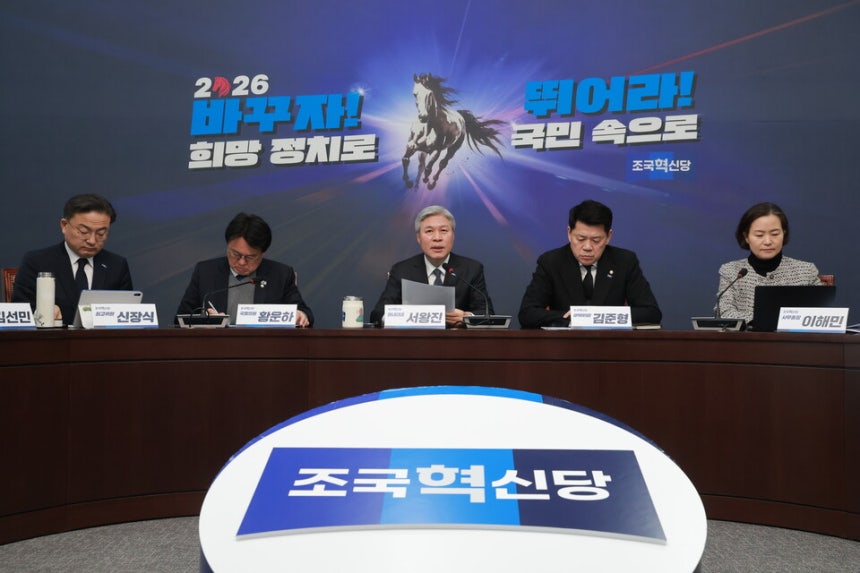
On January 27, South Korea’s Innovation Party openly criticized former U.S. President Donald Trump following his sudden announcement to raise tariffs on Korean products, framing the move as a blatant disregard for South Korea’s legislature and diplomatic norms.
According to the party, Trump’s decision to increase tariffs from 15% to 25%—citing delays in the passage of a special bill on U.S. investment in the Korean National Assembly—amounts to an insult to Korea’s democratic process. Party leaders argued that the announcement, delivered abruptly via social media without prior diplomatic notice, showed neither courtesy nor respect toward a key ally and major investor.
During a party caucus meeting held at the National Assembly in Seoul, the Innovation Party’s policy chief expressed “deep regret” over what he called a unilateral and surprise tariff hike. He went further, accusing the United States of undermining international norms and bypassing established diplomatic procedures.
“The issue is not just the tariffs themselves,” he emphasized, “but the way they were announced—without consultation, without notice, and without regard for Korea’s legislative sovereignty.”
The party urged the South Korean government to respond firmly and called on the National Assembly to issue an official protest, including a message from the Speaker of the Assembly. In their view, silence or a muted response would only reinforce a precedent in which Korea’s political institutions are sidelined by external pressure.
Trump’s post on social media the previous day claimed that South Korea’s legislature had failed to honor agreements between the two countries, prompting him to impose higher tariffs on automobiles, timber, pharmaceuticals, and other goods under a broader framework of “reciprocal tariffs.”
This episode highlights a growing divide within South Korean politics. While some factions continue to prioritize alignment with Washington, others appear increasingly willing to challenge U.S. pressure—even if that stance indirectly strengthens a government perceived as more accommodating toward China.
For critics, Trump’s confrontational style has become a convenient rallying point. By pushing back against Washington in the name of legislative sovereignty and international norms, these politicians are not only resisting U.S. influence but also reshaping the geopolitical tone of South Korea’s domestic debate.
'경제와 산업' 카테고리의 다른 글
| 중국 기술 굴기와 삼성전자에 미치는 영향 분석 (0) | 2026.02.03 |
|---|---|
| “한국은 정말 돈을 풀지 않았을까”(부채 착시) (0) | 2026.01.27 |
| Trump’s Tariff Hike Warning and South Korea’s Emergency Response (0) | 2026.01.27 |
| Trump’s Tariff Hike Warning and South Korea’s Emergency Response (0) | 2026.01.27 |
| [닐의 통찰] 코스피지수 5000 돌파와 일본 버블기 닛케이지수 급등의 비교 (0) | 2026.01.25 |
