Background: Section 232 Tariffs and the U.S. Strategy
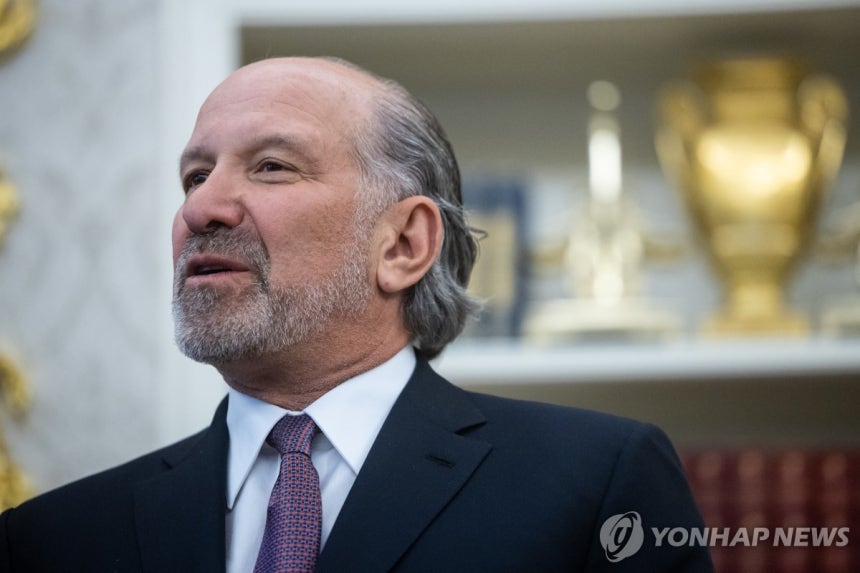
The United States under President Trump’s administration has initiated plans to impose broad tariffs on semiconductor imports using Section 232 of U.S. trade law, which allows such measures if imports are deemed a threat to national security . Uniquely, the plan links tariff exemptions to companies’ investments in U.S. semiconductor manufacturing – a kind of “tariff offset” incentive program introduced by the White House  . In essence, firms that invest in expanding America’s chip production or supply chain would receive preferential tariff treatment on their exports to the U.S., whereas others could face steep duties.
As part of this strategy, the Trump Administration outlined a two-phase approach. In Phase 1, effective from January 15, 2026, the U.S. imposed a 25% tariff on a limited set of high-end semiconductor products (specifically, advanced computing chips like NVIDIA’s H200 and AMD’s MI325X) . These initial tariffs are narrow in scope – with some exceptions – so the immediate impact on most of South Korea’s chip exports is minimal. However, Phase 2 involves potentially much broader tariffs on virtually all semiconductor-related imports at a higher rate, to be implemented after negotiations with key trading partners . In other words, the U.S. is using the threat of sweeping tariffs as leverage to extract investment commitments. The underlying goal is to bolster domestic chip production: tariffs would raise the cost of importing chips, but companies can avoid or lessen those tariffs if they produce more in the U.S. (hence the tariff-offset program) . This approach effectively pressures major foreign chip makers to build facilities in the U.S. in exchange for continued access to the U.S. market on favorable terms.
The U.S.–Taiwan Semiconductor Tariff Deal
The U.S. chose Taiwan as the first major chip-producing partner to strike a deal under this framework . On January 15, 2026, Washington and Taipei announced a trade agreement outlining specific terms for tariff exemptions linked to Taiwanese companies’ investments in America. The key provisions of the U.S.–Taiwan deal are:
• Tariff-free import quotas during new facility construction: If a Taiwanese semiconductor firm builds a new production facility in the U.S., it can import up to 2.5 times that new facility’s annual production capacity in semiconductors to the U.S. with zero tariffs while the plant is under construction . (Any imports beyond that 2.5× volume would still get a discounted, “preferential” tariff rate, lower than the standard tariff .)
• Tariff exemptions after completion: Once the new U.S. semiconductor plant is completed and operational, the company can import up to 1.5 times the facility’s output into the U.S. tariff-free on an ongoing basis . This continues to provide a significant duty-free allowance tied to the size of the U.S. investment.
• Preferential rates for additional imports: Even if the Taiwanese firm’s exports to the U.S. exceed those 2.5× or 1.5× thresholds, those excess shipments won’t simply face the full tariff; instead, a lower preferential tariff rate will be applied to them (ensuring Taiwan’s exporters are still better off than those of non-partner countries) .
In exchange for these generous tariff exemptions, Taiwan has committed to massive investments in the United States. Taiwanese semiconductor companies – led by TSMC (Taiwan Semiconductor Manufacturing Co.) – are slated to invest around $250 billion to expand semiconductor manufacturing on U.S. soil, and the Taiwanese government is providing roughly $250 billion in credit guarantees to support these projects . This reflects an extraordinary scale of foreign direct investment, underscoring how serious the U.S. is about onshoring chip production.
The corporate logo of TSMC, Taiwan’s leading chip manufacturer. TSMC is at the center of the U.S.–Taiwan agreement, given its dominant role in advanced chipmaking. TSMC had already announced a $100 billion U.S. investment plan in early 2025, and under U.S. pressure it is expected to ramp up that commitment even further  . U.S. Commerce Secretary Howard Lutnick emphasized that only investments meeting U.S. approval will qualify for tariff relief – “if our Commerce Department approves their (investment) plan, they can bring in semiconductors worth 2.5 times that capacity without tariffs”, he explained, highlighting that the negotiating leverage lies with the U.S. . According to Lutnick, the strategic goal behind these terms is to relocate about 40% of Taiwan’s semiconductor production and supply chain to the United States . He even cautioned that companies which don’t establish U.S. production could eventually face tariffs as high as 100% on their chip exports to the U.S.  – a virtually prohibitive tariff aimed at forcing compliance with the U.S. investment push.
Notably, as part of the deal, the U.S. also agreed to cap the tariff rate on Taiwanese semiconductor products at 15% . This 15% rate matches the baseline tariff that the U.S. was already applying to semiconductors from other major partners like South Korea, Japan, and the EU . (It appears that in a prior phase of the Section 232 action, the Trump administration had set a uniform 15% semiconductor tariff on allied trading partners as a starting point for negotiations .) By securing the same 15% rate, Taiwan ensured it is not singled out for any harsher treatment while negotiations are ongoing. In effect, Taiwan’s early agreement locked in both a tariff ceiling and a path to tariff-free status for a large volume of its chip exports, in return for making the U.S. a major base for its chip production in the future.
South Korea’s Position and Initial Agreement
South Korea – another leading exporter of semiconductors – now faces the task of negotiating its own arrangement with the United States. When Seoul struck a trade deal with Washington in late 2025, the U.S. semiconductor tariff plan was still in flux, so specific terms for semiconductor tariffs weren’t negotiated at that time . Instead, South Korea obtained a broad assurance in a joint statement that Korea would not be treated less favorably than any other country with a comparable volume of semiconductor trade . In diplomatic wording, the U.S. promised it would not impose worse semiconductor tariff conditions on South Korea than on “any country whose semiconductor trade volume is at least as large as Korea’s” – effectively meaning South Korea would get terms no worse than Taiwan’s, since Taiwan is a chief competitor and one of the few countries in Korea’s league in semiconductor trade .
This promise was important for South Korea, but it was open-ended. At the time, without concrete U.S. policy details, Korea had to settle for a principle rather than numbers. Now that the U.S.–Taiwan deal has set a precedent, that principle needs to be translated into practice. The Taiwanese deal has become a benchmark for Seoul. South Korean officials and industry leaders stress that Korea must secure at least the same level of tariff exemptions that Taiwan did under any Section 232 tariff regime  . Anything less would effectively breach the U.S. pledge not to disadvantage South Korea relative to other major producers.
However, there is still uncertainty about how the “no worse than Taiwan” promise will be implemented in detail. The U.S.–Taiwan agreement provides a template (2.5× capacity during construction, 1.5× after, etc.), but South Korea’s situation is not identical to Taiwan’s. As of now, the exact formula and conditions for South Korea will have to be hashed out at the negotiating table between Washington and Seoul  . Korean government and industry officials acknowledge that, beyond the general assurance, many specifics are “to be determined” and will depend on the negotiation outcome . In short, South Korea has a guarantee of equal treatment on paper – but it still needs to negotiate the exact terms that deliver that treatment in practice.
Challenges for South Korea in Securing Equal Terms
Achieving a deal on par with Taiwan’s is not automatically guaranteed for South Korea. Several challenges and differences stand out:
• Magnitude of Investment Commitments: The scale of investments that Taiwan committed to the U.S. is enormous, and largely private-sector driven. Taiwan’s agreement entails roughly $250 billion in corporate semiconductor investments (primarily TSMC and potentially other firms), backed by an additional $250 billion in credit support from the Taiwanese government . By contrast, when South Korea previously announced a broad investment pledge of $350 billion toward the United States, the composition was very different. Of that total, $150 billion was earmarked for the shipbuilding industry, not semiconductors . The remaining approximately $200 billion was a Korean government investment package that was not exclusive to chips (it included various sectors) . In terms of pure semiconductor investment by the private sector, South Korea’s commitments are much smaller. Samsung Electronics did announce an expansion of its planned U.S. chip investment – increasing a new chip fab project in Taylor, Texas from $17 billion to $37 billion by 2030  – and SK Hynix disclosed a plan to invest $3.87 billion in a new advanced chip packaging plant in Indiana . These are significant investments, but together they are on the order of tens of billions, nowhere near the quarter-trillion scale of Taiwan’s pledge. This raises a question: Will the U.S. offer South Korea the same 2.5×/1.5× tariff exemption formula for far smaller investments? South Korean negotiators may need to put more on the table – i.e. encourage larger or additional private investments – to meet the threshold of generosity that Taiwan received. The U.S. side, which has explicitly tied tariff perks to approved investment plans, could push for more semiconductor capacity from Korea to justify equivalent treatment.
• Nature of Investments (Foundry vs. Memory, Fabs vs. Packaging): The types of semiconductor projects in question also differ. Taiwan’s big player, TSMC, is focused on cutting-edge foundry fabs (producing logic chips for clients) – exactly the kind of high-tech manufacturing the U.S. is keen to host. South Korea’s largest semiconductor firms span memory chips (Samsung and SK Hynix are two of the world’s top memory chip makers) as well as some foundry capability (Samsung Foundry). So far, Samsung’s $37 billion Texas project is a foundry/fab for advanced logic chips, which aligns well with U.S. priorities, while SK Hynix’s $3.87 billion will build a packaging facility (an advanced post-fabrication assembly/testing plant). U.S. negotiators might place greater value on new fabrication plants (which create high-skilled manufacturing jobs and cutting-edge capacity) than on packaging facilities. This could affect the terms: for instance, the U.S. might be willing to grant a 2.5× import allowance only for volume tied to new wafer fabrication capacity in the U.S. If South Korea’s investments skew more toward other parts of the supply chain, there might be debate over how those count toward tariff exemptions. South Korea may need to consider whether to propose or accelerate additional fab projects in the U.S. (for example, a new memory chip plant) to match the spirit of Taiwan’s deal and secure equivalent benefits.
• Leveraging the “Not Worse Than Taiwan” Clause: South Korea does have the explicit pledge from the U.S. as a bargaining chip. Korean negotiators can insist that whatever metrics or ratios are applied, they must yield an outcome where Korea isn’t disadvantaged relative to Taiwan . This gives Korea a strong argumentative foundation, but it might require careful calibration of any formula. For example, if Korea’s investments are smaller, perhaps the exemption multiple or time frame could be adjusted such that the absolute volume of tariff-free imports Korea gets is comparable relative to its typical export volume. There is also the possibility of phasing – if Taiwan’s 2.5×/1.5× deal is tied to very long-term capacities, Korea might seek a somewhat different implementation that still honors the “no worse treatment” principle in effect. The ambiguity of the clause means the quality of negotiation will be crucial. Seoul will likely press Washington to acknowledge that Korea’s commitments (both government and private, including its cooperation on broader tech alliance issues) warrant equal generosity, even if the headline investment figures differ.
• Timeline and Political Pressure: Another challenge is timing. The U.S. has indicated that the broad semiconductor tariffs (Phase 2) will only be applied after negotiations with major producing countries are concluded, and in the meantime, South Korea’s exports won’t face new tariffs beyond the baseline 15% . This gives South Korea some breathing room to negotiate and even potentially increase its investment commitments. However, political factors in the U.S. could accelerate the process. With U.S. mid-term elections coming up in November 2026, President Trump may be eager to showcase victories in bringing manufacturing jobs back to America . Striking a high-profile deal with South Korea – especially one that involves multibillion-dollar Korean investments in U.S. factories – would be touted as a win. This dynamic might put pressure on Seoul to reach an agreement sooner rather than later, possibly on American terms, to help Trump achieve a political milestone. On the flip side, if talks drag out, the uncertainty weighs on Korean companies. They must plan production and sales without knowing whether punitive tariffs might hit a large portion of their exports a few months down the line. This uncertainty could already be incentivizing them to err on the side of more U.S. investment as a precaution.
• Coordination with Industry: The South Korean government will also have to coordinate closely with its semiconductor firms to present a united front. The Ministry of Trade, Industry and Energy in Seoul convened emergency meetings in January 2026 to assess the impact of the U.S. actions and to form a response strategy  . Korean officials have been in communication with their U.S. counterparts (e.g. through diplomatic channels and by sending trade negotiators to Washington) to convey that Korea expects fair treatment . They are also gathering input from companies like Samsung and SK Hynix on what level of U.S. investment those firms can commit to, and what kind of U.S. tariff relief would be sufficient. Since the private companies are the ones who will actually make the investments and receive the tariff exemptions, their plans and comfort levels will shape Korea’s negotiating stance. For instance, if Samsung is willing to expand its Texas fab project further or if SK Hynix contemplates eventually building a wafer fab in the U.S., those could become bargaining chips. On the other hand, there are limits – these investments are costly and take years to pay off. The Korean side will be trying to ensure that the benefit (avoiding, say, a 25–100% tariff on billions of dollars of exports) clearly outweighs the cost of any additional U.S. factories they agree to build.
Potential Impact on South Korea’s Semiconductor Industry
The stakes in these negotiations are extremely high for South Korea’s semiconductor industry, which is a cornerstone of the Korean economy. Here are the key ways the U.S. tariff drive – and the eventual deal – could impact the industry:
• Avoiding Punitive Tariffs is Crucial for Competitiveness: If South Korea secures an exemption package comparable to Taiwan’s, its chipmakers will avoid the worst-case tariff scenarios. If not, Korean semiconductor exports to the U.S. could be hit with very high tariffs – potentially 25% and up, even up to 100% in a extreme scenario as U.S. officials have hinted . Such tariffs would price Korean chips out of many markets. For example, a 25% duty on memory chips or mobile processors would either have to be passed on (making devices more expensive) or absorbed by suppliers, neither of which is sustainable in the competitive tech industry. U.S. electronics manufacturers might shift to buying more components from tariff-exempt sources. South Korea’s main competitors – companies like TSMC, or American and even European semiconductor firms – would suddenly have a massive price advantage if Korea’s products incurred heavy tariffs. This could erode South Korean firms’ market share in everything from smartphone components to server memory, unless a resolution is found.
• Pressure to Localize Production (Capital Expenditure Shift): The situation puts pressure on South Korean companies to localize production in the United States, accelerating a trend that was already cautiously underway due to the U.S. CHIPS Act incentives. To maintain access to the critical U.S. market (and to U.S. customers like Apple, Google, Amazon, automotive companies, etc.), Korean chipmakers may decide that building more facilities in America is a necessary strategic move. Samsung’s and SK Hynix’s announced U.S. projects might just be the beginning – we could see Samsung commit to additional fabs (they have already scouted sites in Texas for potential expansion), or SK Hynix could consider eventually manufacturing memory wafers in the U.S., not just doing packaging. This represents a significant capital expenditure shift. Money that might have been invested in expanding plants in Korea (or in other countries) will be spent in the U.S. instead. Over time, if a substantial chunk of fabrication moves to the U.S. to avoid tariffs, South Korea could experience a slowing growth of its domestic chip production capacity. The Korean semiconductor ecosystem – a dense network of suppliers, contractors, and talent around the big fabs in places like Giheung, Hwaseong, Pyeongtaek (for Samsung) or Icheon (for SK Hynix) – might lose some opportunities for expansion. In the long run, that could marginally reduce Korea’s dominance in certain areas of manufacturing, as more wafer volume runs outside the country.
• Mitigating Supply Chain Disruptions: On the other hand, having some production in the U.S. could insulate Korean companies from geopolitical and trade disruptions in the future. It’s a form of diversification. For instance, during the U.S.-China trade war or pandemic-related supply crunches, companies with multiple production bases fared better. If Samsung builds a robust foundry presence in the U.S., it might attract more American chip design customers who prefer a on-shore manufacturing option. So there is a potential upside of closer integration with the U.S. tech ecosystem. The current negotiations, by forcing the issue, could result in Korean firms establishing that integration sooner. They would also likely benefit from U.S. federal and state subsidies (through the CHIPS Act and local incentives) for any new facilities, which can offset some costs. In effect, South Korean chipmakers could end up with a significant American footprint partly financed by U.S. incentives – which, if managed well, might strengthen their global operations (so long as it doesn’t too greatly detract from their base in Korea).
• Impact on R&D and Talent: South Korea’s semiconductor leadership has a lot to do with massive R&D investments and a steady pipeline of engineering talent. If companies divert resources to building and ramping up overseas plants, there’s a concern that some R&D might follow (e.g. setting up R&D centers near new U.S. fabs). There could also be a brain drain if Korean engineers and technicians are reallocated or if the companies hire more Americans instead of Koreans for new roles. However, firms like Samsung and SK Hynix thus far have kept their most advanced R&D largely in Korea. They will likely continue to do core R&D at home (partly because the bulk of their existing facilities and engineers are there, and because the Korean government is heavily supporting domestic semiconductor research). The challenge will be to maintain that focus while also executing big projects abroad. The Korean government might respond by increasing support for domestic R&D to ensure that even if manufacturing is partially offshored, the country retains its edge in innovation and design.
• Market Perception and Stability: The uncertainty around tariffs is not ideal for business planning. Markets generally dislike uncertainty. Clarity – in the form of a deal that spells out South Korea’s tariff exemption conditions – would likely be welcomed by Korean companies and their customers. If a deal is reached that is seen as favorable to South Korea (matching Taiwan’s terms), it could remove a cloud hanging over the industry. Korean firms would then know that, for example, as long as they invest “X” amount in the U.S., they can export “Y” amount of chips tariff-free. This allows for more confident long-term strategy. Conversely, if negotiations stumble or if the U.S. presses unrealistic demands, it could spook investors and partners. There’s also the broader trade relationship to consider: South Korea might seek concessions or flexibility by leveraging other aspects of the U.S.–Korea alliance (such as defense cooperation or other trade issues). But since the U.S. has framed the semiconductor tariffs as a national security matter, they might be less inclined to compromise on it without concrete investments.
• Domestic Industry Response: Within South Korea, the government and industry are moving in “one team” fashion to tackle this issue . There’s a recognition that this is a serious challenge that requires a unified response – combining diplomatic negotiation with strategic business decisions. We may see South Korea, for instance, increase incentives for its companies to invest at home even as they invest abroad, as a way to keep domestic industry robust. If a large portion of production is destined to shift to the U.S., Korean policymakers might consider measures like tax breaks, infrastructure support, or expedited permits for any new facilities in Korea to make sure the country remains an attractive place to build the next generation of fabs. There’s also likely to be an effort to diversify export markets – if U.S. tariffs make the American market complicated, Korean companies might put more emphasis on other markets (though the U.S. is hard to replace, being a major consumer of semiconductors via its tech industry). In the long run, this whole episode may prompt South Korea to seek more multilateral or regional arrangements to prevent being cornered by such unilateral U.S. actions in the future (for example, closer tech trade cooperation with the EU or within Asia to balance U.S. leverage).
In summary, the U.S. semiconductor tariff initiative – driven by Section 232 and exemplified by the U.S.–Taiwan deal – has set up a delicate situation for South Korea. On one hand, it poses a risk: if Korea doesn’t secure a comparable deal, its chip exports could suffer badly from tariffs, undermining one of its flagship industries. On the other hand, it presents an opportunity: by negotiating a good deal and investing in the U.S., South Korean companies could deepen their access to the U.S. market and even benefit from subsidies, albeit at the cost of some localization. The coming negotiations will determine which of these narratives wins out. The South Korean government appears committed to ensuring that Korea’s treatment is no worse than Taiwan’s, as was promised . Achieving that will likely require diplomatic finesse and significant business commitments. For now, there is a bit of time – broad tariffs on semiconductors will be held off until deals with countries like South Korea are hashed out . But all parties are aware that the clock is ticking, especially with U.S. political timelines in play. The outcome of the U.S.–Korea talks on semiconductor tariffs will be a decisive factor in shaping the future geography of chip manufacturing and the competitive balance between major chipmakers.
References
1. 김동현, “美, 대만에 먼저 반도체관세 면제조건 제시…韓은 앞으로 협상,” 연합뉴스 (via Daum), 2026.01.16      .
2. Yonhap News – Focus on Economy analysis, “트럼프 반도체 관세, 대만은 면제 윤곽…한국은 다시 협상 테이블로,” 2026.01.16   .
3. 산업통상자원부 보도자료, “미, 반도체·핵심광물 232조 조치 도입 및 영향,” 대한민국 정책브리핑, 2026.01.15    .
'경제와 산업' 카테고리의 다른 글
| 삼성 홍보팀의 언론홍보와 민심 괴리: 구조적 분석 (0) | 2026.01.16 |
|---|---|
| 미국-대만 반도체 관세 면제 조건과 한국 반도체 산업 영향 분석 (0) | 2026.01.16 |
| 2026년 한국 경제 전망과 투자 전략 (0) | 2026.01.12 |
| Goldman Sachs Warns of Korean Economic Challenges in 2026 (0) | 2026.01.12 |
| HBM 시장 최신 동향 보고서 (2026년 1월 기준) (0) | 2026.01.12 |
